
Co-hosts:
Climate and nature dialogue has stalled. A polarised political environment, widespread mis- and disinformation amplified by vested interests, and addictive algorithms that split attention and sort people into increasingly isolated echo-chambers, have widened divisions and made constructive conversations harder.
Despite this, public concern about the climate crisis remains high and trust in science holds strong. So, why does progress on behaviour change feel stuck, and why does political momentum seem to slow down (or even backslide)?
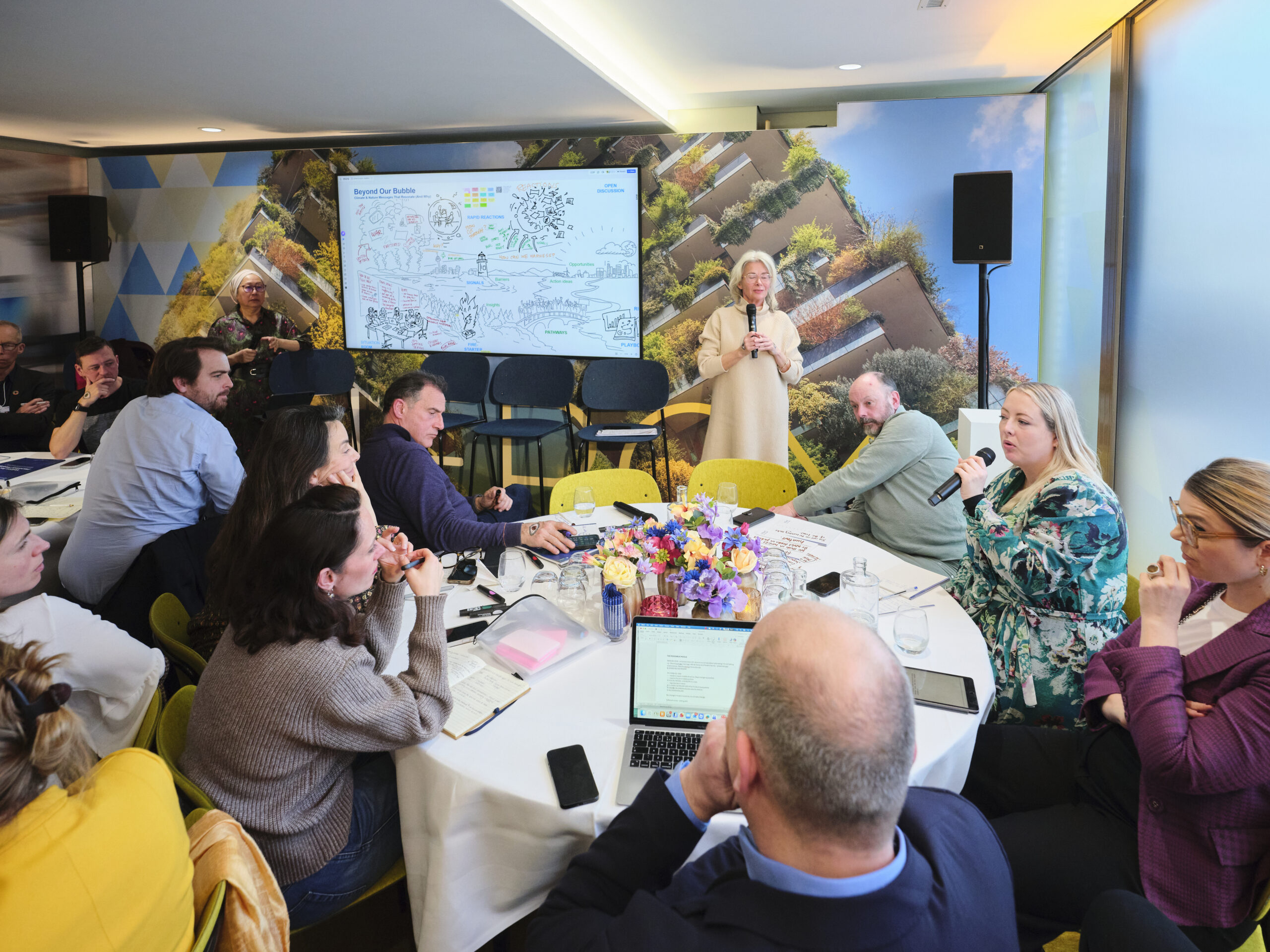
NCIT, in collaboration with the Sunway Centre for Planetary Health, designed Beyond our Bubble to bring together leaders spanning business, media, art, philanthropy and science at InTent for Change during the Word Economic Forum in Davos, to uncover and unpick the communications barriers facing the climate and nature community.
“We need to stop thinking about the issue in terms of information and start thinking about it in terms of attention”
– Katie Gilbert, Managing Director of Global and Social Issues, M & C Saatchi
In an attention economy, climate and nature messages are battling with an endless stream of content specially engineered to maximise views, engagement, and watch time, and amplified by algorithms to keep us hooked. In these conditions, communicators cannot demand attention. Attention needs to be earned. This means moving from alarmist, doom-and-gloom narratives towards content that people actually want to consume.
Dr Jemilah Mahmood delivering workshop ‘Beyond our Bubble: Climate and Nature Messages that Resonate (& Why?‘)’ at InTent for Change at Davos 2026.
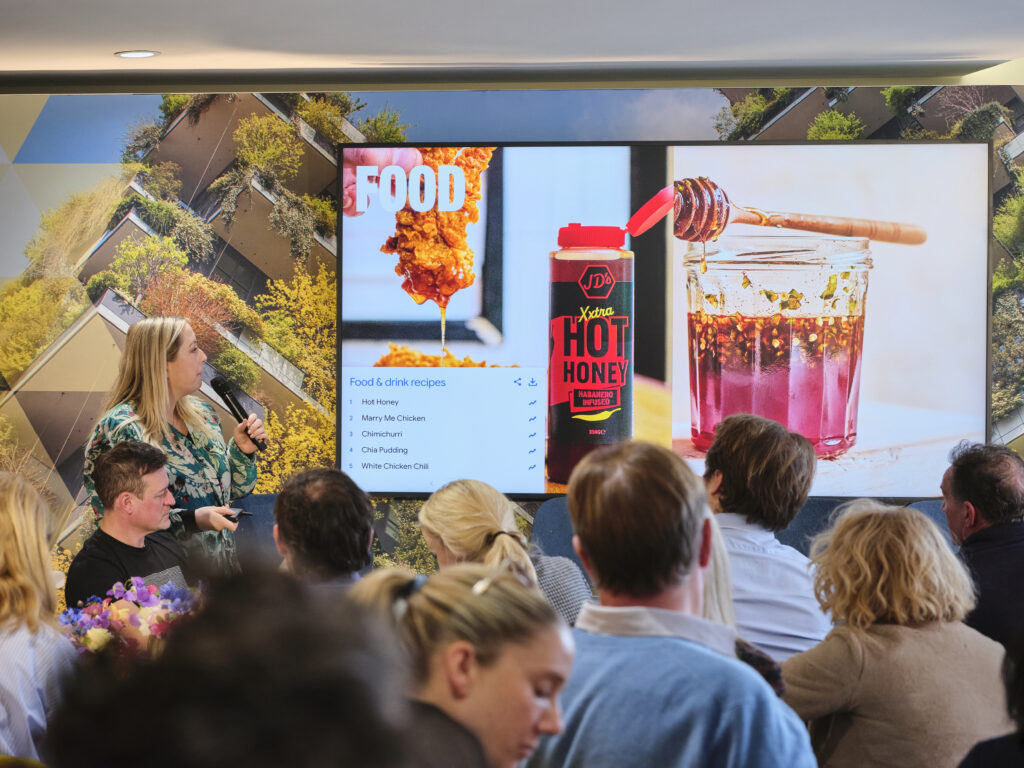
Compelling communications need to offer something in return, whether that’s entertainment, humour, utility, or surprise, and use cultural momentum and trends as vehicles for sustainability messages. This also means outpacing our opponents by becoming more predictive and responsive: anticipating the next big cultural moment, from hot honey or the 2026 World Cup; capitalising on opportunities as they emerge, like Lime Bike’s 2025 “Good Service on all Limes” campaign; and harnessing new tools and media formats to cut through the clutter.
“it’s important to dress these facts up in entertainment in such a way that it opens their minds in unique capacities”
– Rainn Wilson, Actor and Co-Founder of Climate Basecamp
Climate communicators are not operating on a level playing field. The science on climate change is well established, yet our opponents have spent decades seeding doubt, undermining the science, and sowing division. Today, with the rise of AI helping to amplify biases amongst digital ecosystems, and algorithms which reward engagement over accuracy, sustainability messages are fighting (and often losing) an uphill battle for relevance, clicks, and views.
Johan Rockström Director of the Potsdam Institute for Climate Impact Research, shared an encouraging insight: The surge in misinformation doesn’t show we’re losing. Instead, it signals that the green transition is gaining meaningful political and cultural traction, and that these pushbacks should be interpreted as the reactions of powerful vested interests recognising the threat it poses to established power structures.
For climate communicators, the challenge is not simply to produce more evidence – the data has existed for decades – it is to ensure that credible information can compete in an attention environment designed to maximise engagement. We need to make evidence-backed messages that earn attention, cut through the noise, and wins space on the FYP.
“we need partnerships that put investments into creating situation rooms to pollute the digital highways with the truth, and not only the truth, with the winning stories.”
– Johan Rockström, Director of the Potsdam Institute for Climate Impact Research
“Who’s the person you’re trying to reach, and what would they care about?”
– Paul Goodenough
Climate communications have become trapped in a bubble – speaking to people who already agree with the cause, in technocratic language full of sustainability jargon, heavy with assumptions about shared values, understanding, and worldviews.
The process of broadening communities of support for climate and nature action requires us to move beyond the “I talk, you listen” model and start by listening ourselves. That means meeting people where they are, understanding what they care about, and building messages around their values, experiences, and aspirations rather than trying to convince them to adopt ours.
It also means dialling down the judgement and perceived differences between ‘us’ and ‘them’, finding common ground, and putting the love back into climate communication:
“I think climate communication drips with “you people”. […] Nobody loves it and nobody loves these people, and that’s the problem I have with all of this climate stuff. There’s no love. It drips with disdain for the people that we’re talking to.”
– Steve Walls, Co-founder, Climate Basecamp
One thing climate messengers can do now is to pivot away from extraction towards generation – moving beyond narratives of sacrifice and instead showing how sustainability can improve people’s lives and communities. Rather than asking, “What will you give up?” in the name of climate, try saying, “Here’s what climate action will do for you”.
But reaching beyond our bubble means recognising that messages do not reach audiences unchanged, and communicators must reconcile the gap between what we intend to say and what our audiences actually hear.
Zelda Chauvet, Director at Our Frame, highlighted how climate messages are filtered through identity, emotions, power, norms, and biases, before they have a chance to land:
“Once the message is out in the public sphere, it doesn’t belong to the sender anymore. It belongs to the audiences, and audiences will reconstruct the meaning of the message according to their social and political realities”
– Zelda Chauvet, Director at Our Frame
We work to accelerate climate and nature action through communications that put audiences, culture, and impact at the centre. If you are interested in collaborating with us to develop, test, or scale new approaches to climate communications, get in touch.