
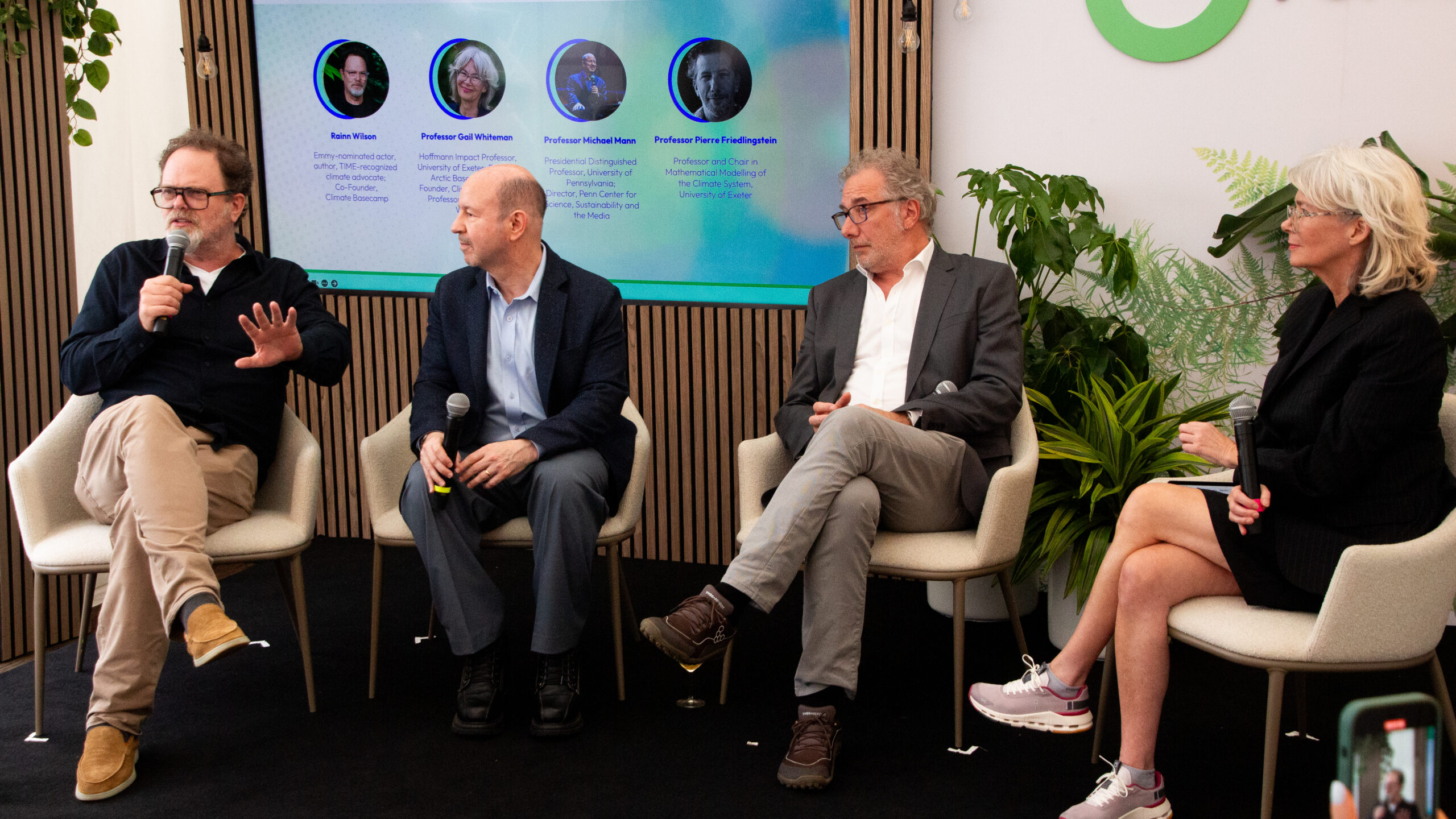
Leading climate scientists, business experts, and cultural voices join NCIT aboard Fortescue’s Green Pioneer at Climate Week NYC to discuss how business, leadership, and entertainment can accelerate action on climate and nature.
Headlines around climate change have become increasingly bleak. In 2025, the UK recorded its hottest year since records began, fuelling concern about the pace of climate change and progress towards tackling it.
At New York Climate Week 2025, the Nature and Climate Impact Team (NCIT) at the University of Exeter brought together leading voices in climate science, business, and culture for a different kind of conversation.
Reality Check: Moving from Crisis to Hope featured climate scientists Professor Michael E. Mann and Professor Pierre Friedlingstein, actor and climate advocate Rainn Wilson, and business leader Dr Andrew Forrest. Together their contributions explored the scientific realities of climate change, the political and economic barriers slowing progress, and the role of business leadership, creative cultural communication, and governments in moving climate action forward.
Held aboard Fortescue’s Green Pioneer, the world’s first ammonia-powered shipping vessel, the event brought these perspectives together around a central question: how can we face the severity of climate change while maintaining the agency to shape what happens next?
Following welcoming remarks by Professor Gail Whiteman, Hoffmann Impact Professor for Nature and Climate at the University of Exeter, and US Actor and climate advocate Rainn Wilson, Professor Pierre Friedlingstein and Professor Michael E. Mann explored what climate science tells us about the current situation and possible future pathways.
Professor Pierre Friedlingstien, Chain in Mathematical Modelling of the Climate System at the university of Exeter and lead author of the Global Carbon Budget, explained how future warming trajectories depend on action we take now:
“Future warming, in addition to where we are now, is only depending on future emissions. So the future in our hands” – Professor Pierre Friedlingstein
He cautioned that, despite signs of progress, models suggest that emissions have yet to peak and there is still a long way to go. While the rate of increase in CO2 emissions has slowed globally, the ultimate goal must be to bring emissions to zero:
“we haven’t reached the peak of CO2 emission yet. […] the rate of increase was much faster and steeper than it is now, so we’re going in the right direction, but what we need is to bring these numbers to zero eventually” – Professor Pierre Friedlingstein
He underlined the importance of reaching that goal:
”The only way to stop climate change is to stop emitting CO2 and other greenhouse gases”- Professor Pierre Friedlingstein
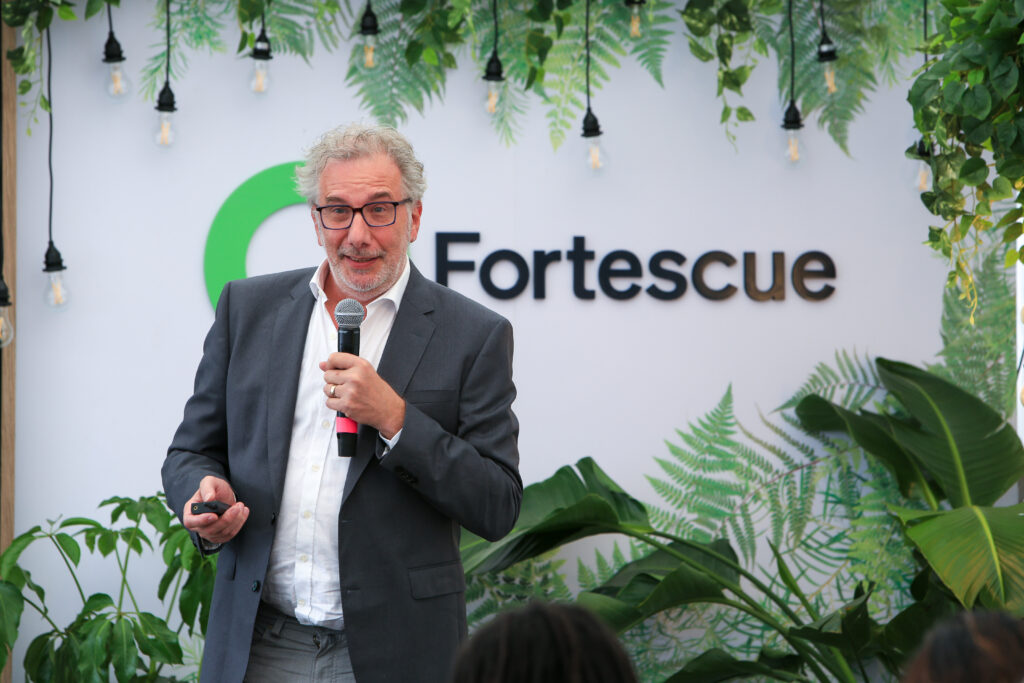
Professor Pierre Friedlingstein speaking on Fortescue’s Green Pioneer at Climate Week NYC.
While the science makes the need for emissions cuts clear, progress on climate continues to face political and economic obstacles.
Professor Michael E. Mann, Director of the Centre of Science, Sustainability and the Media at the University of Pennsylvania, argued that the main barriers to climate action are political rather than technological; the green energy technologies needed to decarbonise the global economy already exist – overcoming resistance and putting those technologies to work at scale remains a major challenge:
“We have the clean energy technology to decarbonise our world. They [the obstacles] are entirely political, and political obstacles can be overcome. That’s up to us.” – Professor Michael Mann
For Mann, this makes case for urgent action stronger. There is still agency in the choices made by industry and governments, and decisions our leaders make now will shape the future emissions scenarios that determine how much warming can still be avoided:
“There is urgency in acting now and there is agency in acting now.”
Professor Michael Mann
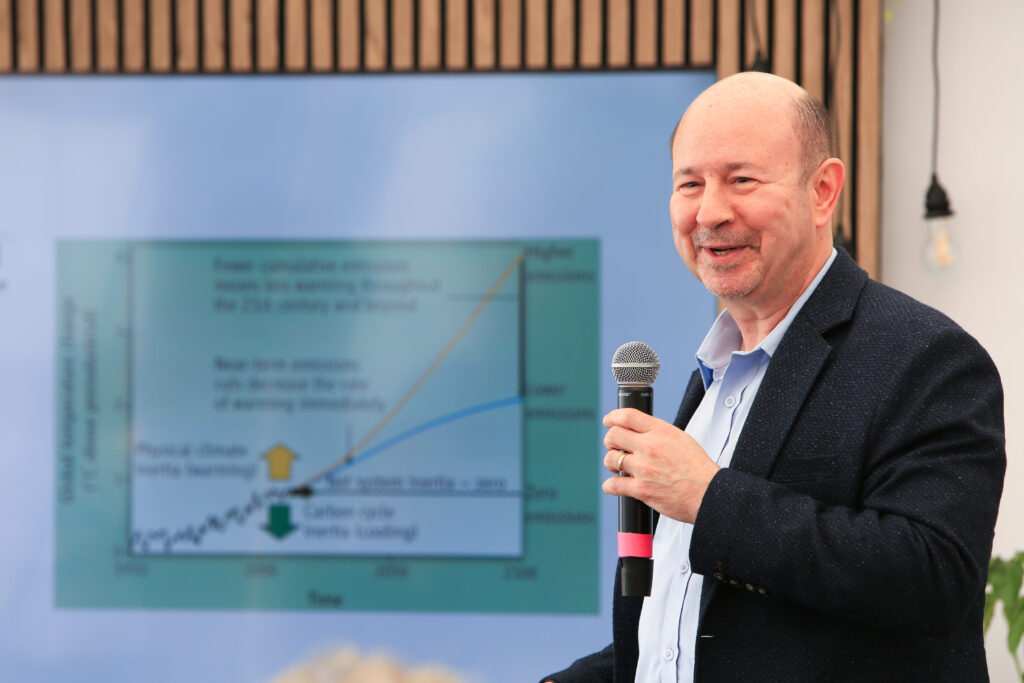
Professor Michael Mann speaking on Fortescue’s Green Pioneer at Climate Week NYC.
The setting reinforced this message. The event took place aboard the Fortescue Green Pioneer, the world’s first dual-fuel ammonia-powered vessel, which was in New York for Climate Week as part of its tour promoting alternative marine fuels. By connecting conversations about climate leadership with an example of industry exploring alternative approaches to reducing emissions, the venue highlighted the role businesses can play in driving change through innovation and investment, while underlying the need for decisive action from both business leaders and governments.

Fortescue’s logo, surrounded by soft lights and greenery
A key talking point of the event was how climate communication can reach beyond scientific and policy circles, and how creative cultural influence and business leadership can turn scientific evidence into progress.
Actor, long-time climate advocate and founding partner of Project Basecamp Rainn Wilson spoke about the potential of entertainment and creative storytelling to shift cultural attitudes at scale. Humour, music, marketing, and the arts, he argued, can help bring climate change into everyday conversations and engage audiences in new ways.
“We have to communicate this in out-of-the-box ways using humour and storytelling and music. We can do this. We can harness science, we can harness the arts, we can harness al of the great, you know, marketing capabilities that we’ve learnt over the decade to make real a lasting change” – Rainn Wilson

Rainn Wilson speaking on Fortescue Green Pioneer at Climate Week NYC
The conversation then turned to the responsibility of business leaders at act with courage. Professor Gail Whiteman, who leads NCIT, highlighted the importance of business leadership acting with courage to turn ambition into action, particularly at the executive level.
“We need courage. We need it individually and we need it collectively, and we need it at the leadership level and we certainly need it in the C-Suite” – Professor Gail Whiteman
During a fireside conversation with Gail Whiteman, Dr Andrew Forrest, Founder and Executive Director of Fortescue and Founder of Minderoo Foundation, highlighted the role of business in facilitating innovation and the need for government support. Responsibility for the green transition, he urged, cannot rest on technology or the courage of individuals alone:
“Governments must play a role. You can’t just rely on technology. You can’t just rely on courage. Government cannot back out. They’ve got a role to play.” – Dr Andrew Forrest
Collectively, their contributions underscored the importance of culture, business, and governance to work together to align action and attitudes with scientific evidence.
Watch the event recap here:
Reality Check connected the science of climate with the political, business, and cultural forces fighting over our collective future. The discussion highlighted the need for urgent action, agency, and courage to tackle the challenge at every level.
Interested in collaborating with NCIT on climate communications or strategic convening? Get in touch to explore opportunities to work together.